
The Basics of Sharpening
Properly prepare your knife for safe and enjoyable whittling
by Bob Duncan
Although it may seem contradictory, a sharp knife is a safe knife. When a knife is dull, or not shaped properly, it requires more force to push the blade through the wood. The more force required to make the cut, the less control you have. Because a sharp, properly shaped blade requires less force, it reduces fatique, resulting in a more enjoyable carving experience. Many novice carvers get discouraged because they are carving with a dull knife or a blade that is not shaped properly.
Sharpening is a simple process, but it takes practice to execute successfully. If you boil it down to the basics, sharpening consists of rubbing a piece of metal against an abrasive to create a wedge shape. It takes practice to consistently hold the metal against the abrasive at the correct angle.
When it comes to choosing an abrasive to sharpen with, you can use anything from simple sandpaper to elaborate power sharpeners. With any method, the basic process is the same—use a coarse abrasive to wear away the metal of the blade until the blade is the shape you want. Then, use progressively finer grits of abrasive to remove the scratches from the previous grit until you have a polished edge.
Manufacturers seldom shape the blade of their pocketknives with carvers in mind. Typically, the factory edge consists of a gradual bevel on the blade that becomes a steep wedge at the cutting edge. This type of edge is durable and works well for cutting rope and cardboard boxes, but you need a flatter bevel for carving wood.
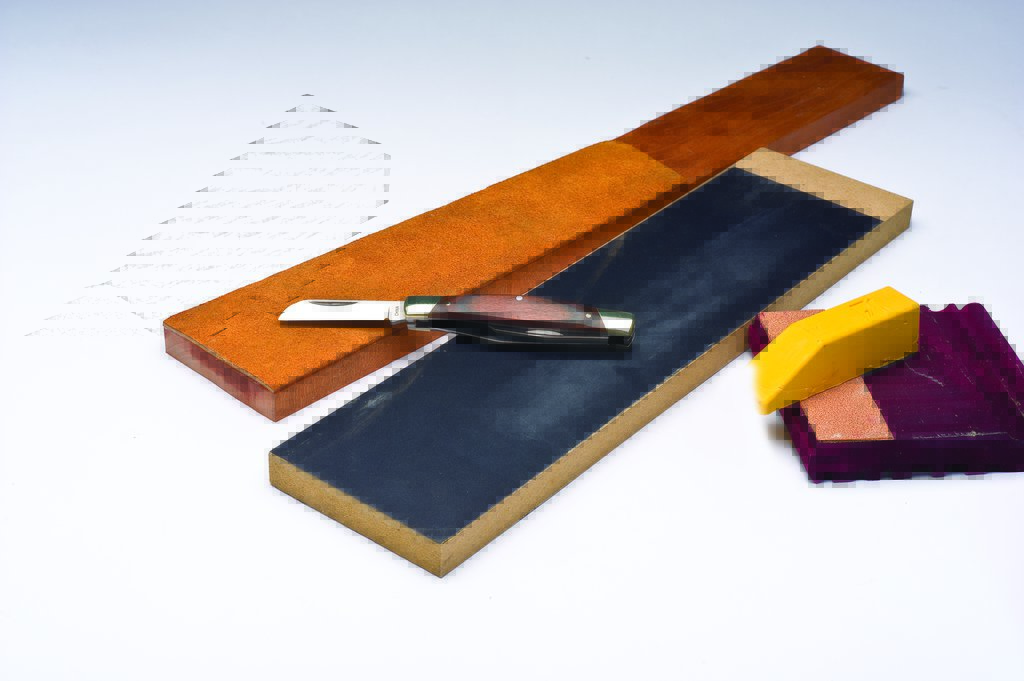
There are many methods and products to help you achieve a sharp cutting edge, but I recommend beginners start with sandpaper. Use spray adhesive to attach 6″ (152mm)-long strips of sandpaper to a perfectly flat surface, such as glass or medium-density fiberboard (MDF). For the initial bevel shaping, start with 200- to 320-grit wet/dry sandpaper. Wet/dry sandpaper is more durable than regular sandpaper. Work your way up through the grits to 600 grit, and then polish the blade on a leather strop.


This article was originally published in Whittling 2015.
Discuss this material on the Woodcarving Illustrated forums.
Read more about techniques for beginners!
Related posts:


Get the Latest Issue
For more articles like this, subscribe to Woodcarving Illustrated magazine.
Plus! Get digital mini magazines in your e-mail between printed issues.
