
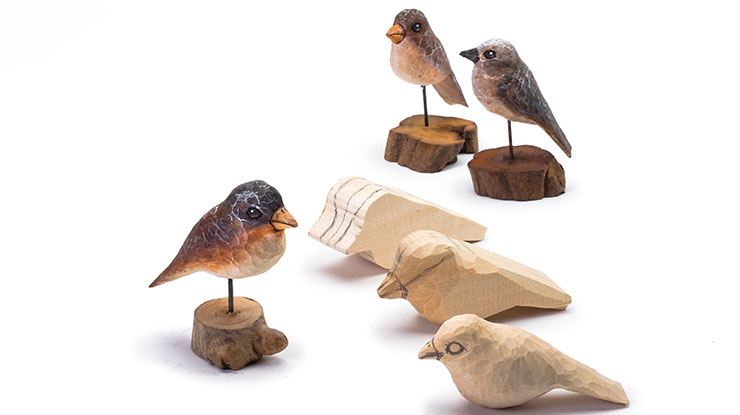
Carving Folk-Art Birds
Highlight the tool marks with a little paint to simulate feathers on these simple designs
By Don Dearolf
Carve these simple designs with just a few tools. The pattern is generic enough that you can easily adapt the design to your favorite bird with only a few knife cuts and some paint. Before making your first cut, check out our exclusive article on adding cushions to your gouge handles.
Carving the Birds
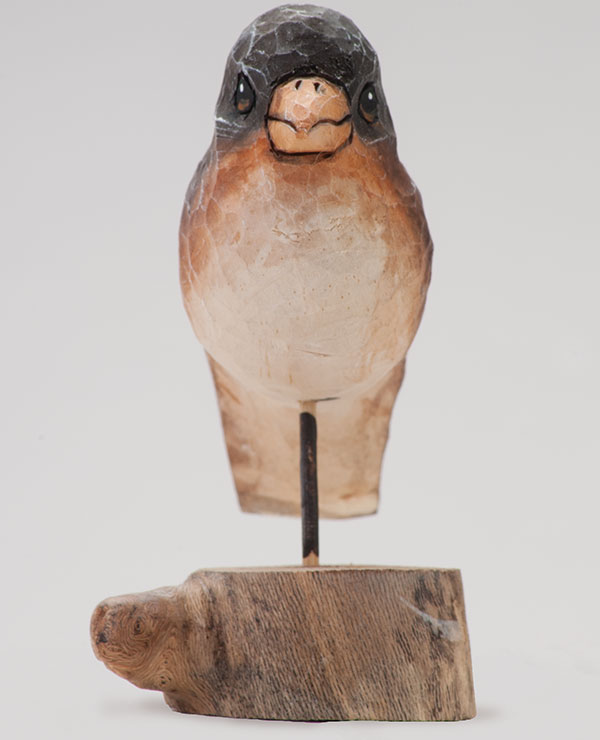
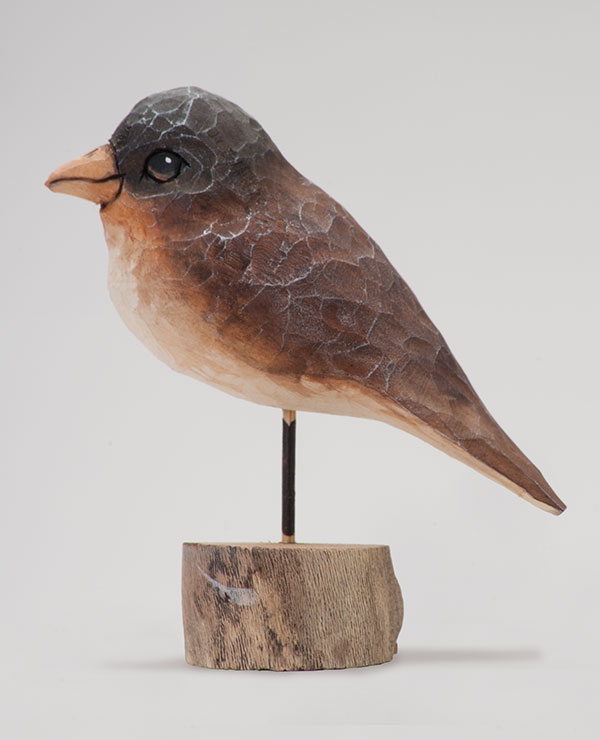
Transfer the pattern to the blank and cut the two profiles with a band saw. Leave the wood thick around the beak. Then, carefully round the sharp corners with a knife. Thin the edges of the tail, but leave the middle thicker to create an oval shape when looking at the end. Carve the eye channels. Then, carve the beak. Burn the outlines of the eyes, around the base of the beak, and the mouth lines. Drill a small hole in the bottom and insert a toothpick (to mount the bird to the base, and to hold the bird while painting).
Painting the Birds
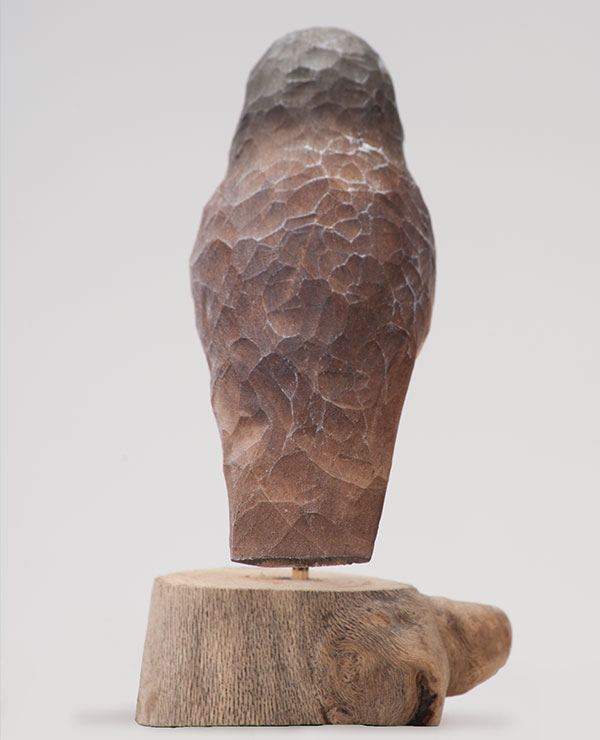
Finish the project with thinned acrylic paints. Apply thin washes of color and build up the color in layers. Use Payne’s grey for the dark parts of the back, burnt umber for the brown areas, and raw sienna for the breast. Then, when the paint is dry, apply a heavily thinned coat of burnt umber to tie everything together.
Paint each eye with full-strength Mars black and allow it to dry. Then add a dot of full-strength burnt umber in the bottom front corner and a titanium white highlight dot in the upper back corner of each eye. When the eyes are fully dry, dry-brush titanium white over the whole piece to highlight the tool marks.
 |
 |
 |
Making the Base
Slice a small section of a tree limb across the grain. Drill a hole matching the diameter of the toothpick in the center of the slice. Apply a clear finish to the base. When it is dry, glue a toothpick into the bottom of the bird and the hole in the base.
|
Materials • Basswood, 1 1/4″ (3.2cm) thick: 2 1/2″ x 3″ (6.4cm x 7.6cm) • Tree limb slice, 3/4″ (1.9cm) thick: 2″ (5.1cm)-dia. • Toothpick • Acrylic paints, such as Liquitex: burnt umber, Mars black, Payne’s grey, raw sienna, titanium white • Clear finish (for base) • Glue |
Tools • Carving knife • Small gouge • Woodburner with nibs: assorted • Paintbrushes: assorted • Drill with bit: 1/16″ (2mm)-dia. |
| About the Author |
|
Don Dearolf painted for several years before taking up carving in 1994 after his brother Dave took him to the Lancaster County Woodcarvers Show. Don loved to carve and share patterns, blanks, and rough outs with others. |
Get the Latest Issue
For more articles like this, subscribe to Woodcarving Illustrated magazine.
Plus! Get digital mini magazines in your e-mail between printed issues.
